
Digital vs Manual Badminton Scoreboard: Flip Scorers or a Court TV?
By the Multi Score Screen team5 min read
Main guide: Badminton scoreboard guide

In this guide
A digital badminton scoreboard shows the rally score, games won and the server on a court TV, updated from a phone with one tap per rally. The manual alternative in most badminton halls is the flip scorer: a table-top or stand-mounted set of number cards that an umpire, a player or a helper turns after every rally. Flip scorers are cheap, robust and familiar. The question is whether turning a card after every single rally, up to 60 or more times a game, is still the best way to run a club night or a tournament.
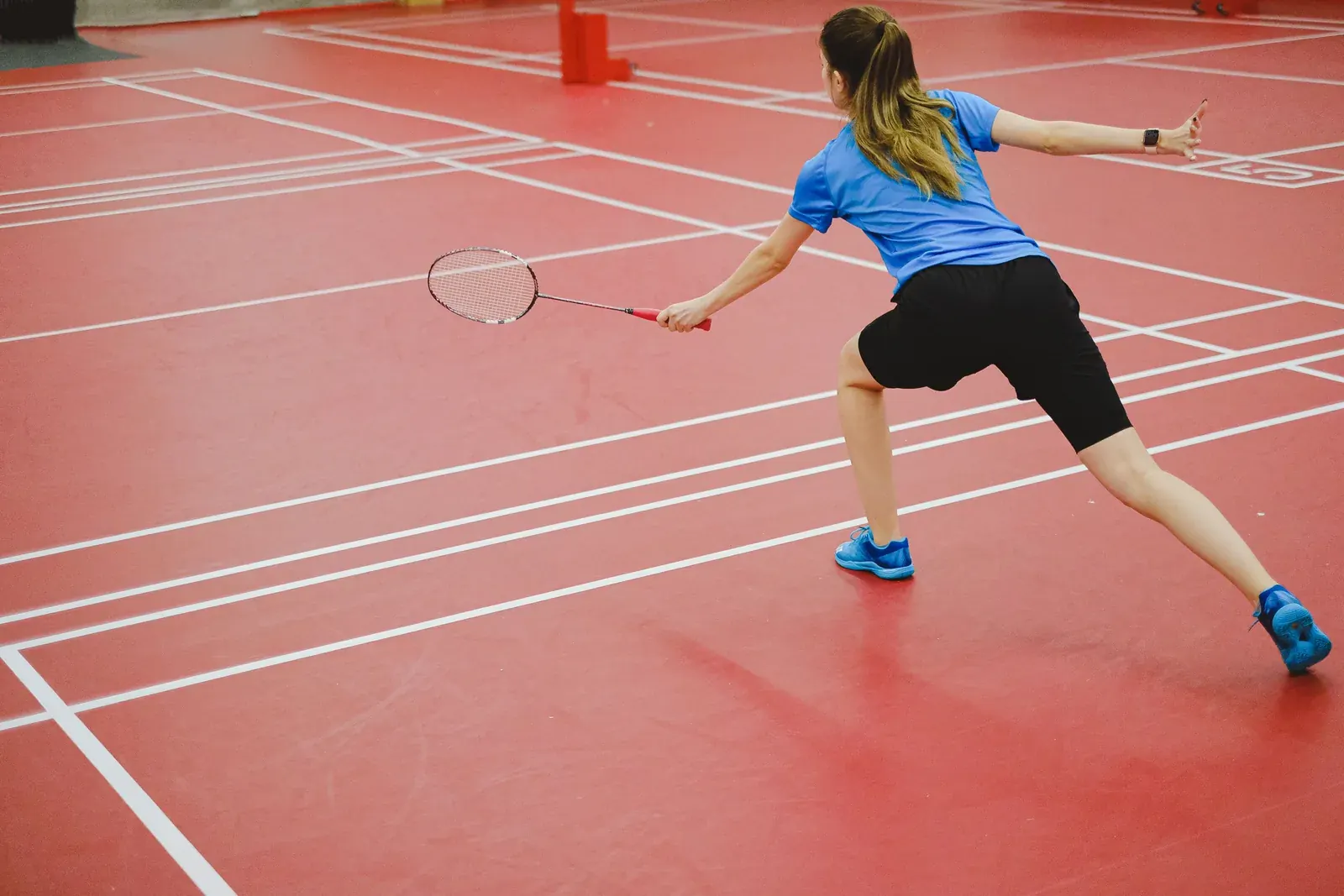
How badminton is scored manually
- Flip scorers on a table or a stand at the side of the court, with cards for each side's points and games.
- The umpire's scoresheet, used at tournaments alongside the flip scorer.
- Calling the score. In casual play the server calls the score before serving and everyone remembers.
In club play without an umpire, the flip scorer often stands unused because nobody wants to stop after each rally to turn it.
Where manual scoring struggles
- Rally scoring means constant updates. Every rally changes the score. A flip scorer needs a dedicated person or it falls behind.
- Close games. At 20-20 the game continues until one side leads by two, and at 29-29 the next rally wins. That is exactly when tired players miscount.
- Server and service court. The winner of each rally serves next, from the right or left court depending on their score. Players often have to rebuild this from the score.
- Distance. Flip cards are readable up close but small from the far baseline, and invisible from the balcony.
- No record. League results and tournament scoresheets have to be copied and carried to the desk.
Side by side
| Manual (flip scorer, scoresheet, memory) | Digital badminton scoreboard on the court TV | |
|---|---|---|
| Rally points | Card turned after every rally | One tap per rally on a phone |
| 20-20 and 29-29 | Up to the people counting | Applied automatically |
| Next server | Worked out from the score | Serve indicator on screen |
| Games won | Separate cards | Shown with the game number |
| Readable from the far baseline | Close up only | Yes, large figures |
| Followed off court | No | Live link via QR in any mobile browser |
| Corrections | Turn back and argue | Point and game undo |
| Sponsors | Banner on the wall | Strip under the score; full-screen content between matches |
| Events | Paper sheets | Round robin or knockout across courts from one dashboard |
| Power and network | None | TV with internet and a streaming app or HDMI |
What a digital setup needs
- A screen for each court, at the side near the net and out of the shuttle's flight line; see badminton hall scoreboard.
- Internet at each screen; large halls often need access points on the side walls, covered in the badminton scoreboard Wi-Fi guide.
- A phone for the scorer. Players scan the QR code on the TV and enter the PIN; nothing to download.
When a flip scorer is still the right tool
- Practice and drills where nobody keeps score.
- Courts used rarely, without power near the court.
- As a backup at a tournament, beside the umpire.
Many clubs keep flip scorers in the cupboard and use the screens for club nights, leagues and events.
What changes for coaches and juniors
Coaches use visible scores to add pressure to condition games, and juniors learn the rules faster when they see the score behave correctly at 20-20. A screen also helps young players who lose track during long games: they can check the score instead of guessing. For a club with a big junior section, that alone often justifies screens on the main coaching courts.
A four-week trial
Put a digital scoreboard on two busy courts for a month and leave the others manual. Track three things: did league nights finish on time, how many score disputes reached the club captain, and which courts did members choose? Ask the coaches too.
Before switching
- Which courts host league matches, coaching or tournaments?
- Can each court have a screen at the side, out of the flight line?
- Does the hall Wi-Fi reach those positions?
- Who will score: players, coaches or umpires?
- Do you want sponsors on the screens from the start?
- Which plan fits the number of courts?
Licences are per court: $44/month on Starter for one court and one sport; $134/month on Pro for up to five courts with all eight sports; $224/month on Elite for up to ten courts with white-label branding; or $1,299 once per court on Unlimited, with no term limit. See the pricing page and the badminton scoreboard buying guide.
Frequently asked questions
Is a digital badminton scoreboard worth it for a club?
Usually, on courts used for leagues, coaching and events. Rally scoring changes the score constantly, and a screen keeps up without anyone turning cards.
Does the digital scoreboard handle 20-20 and 29-29?
Yes. It requires a two-point lead from 20-20 and awards the game at 30-29 if the score reaches 29-29.
Does it show who serves next?
Yes. The serve indicator follows the winner of each rally.
Do we need special scoreboard hardware?
No. It runs on a TV or display the court already has and is controlled from a phone.
Can we keep flip scorers as a backup?
Yes. Many clubs keep them for practice or as a tournament backup.
Want to compare on your own courts? Request a demo and we will show a live badminton match on your TV.
Explore the Multi Score Screen digital scoreboard for padel, tennis, pickleball and 5 more sports →