
Why Is a Padbol Scoreboard Important?
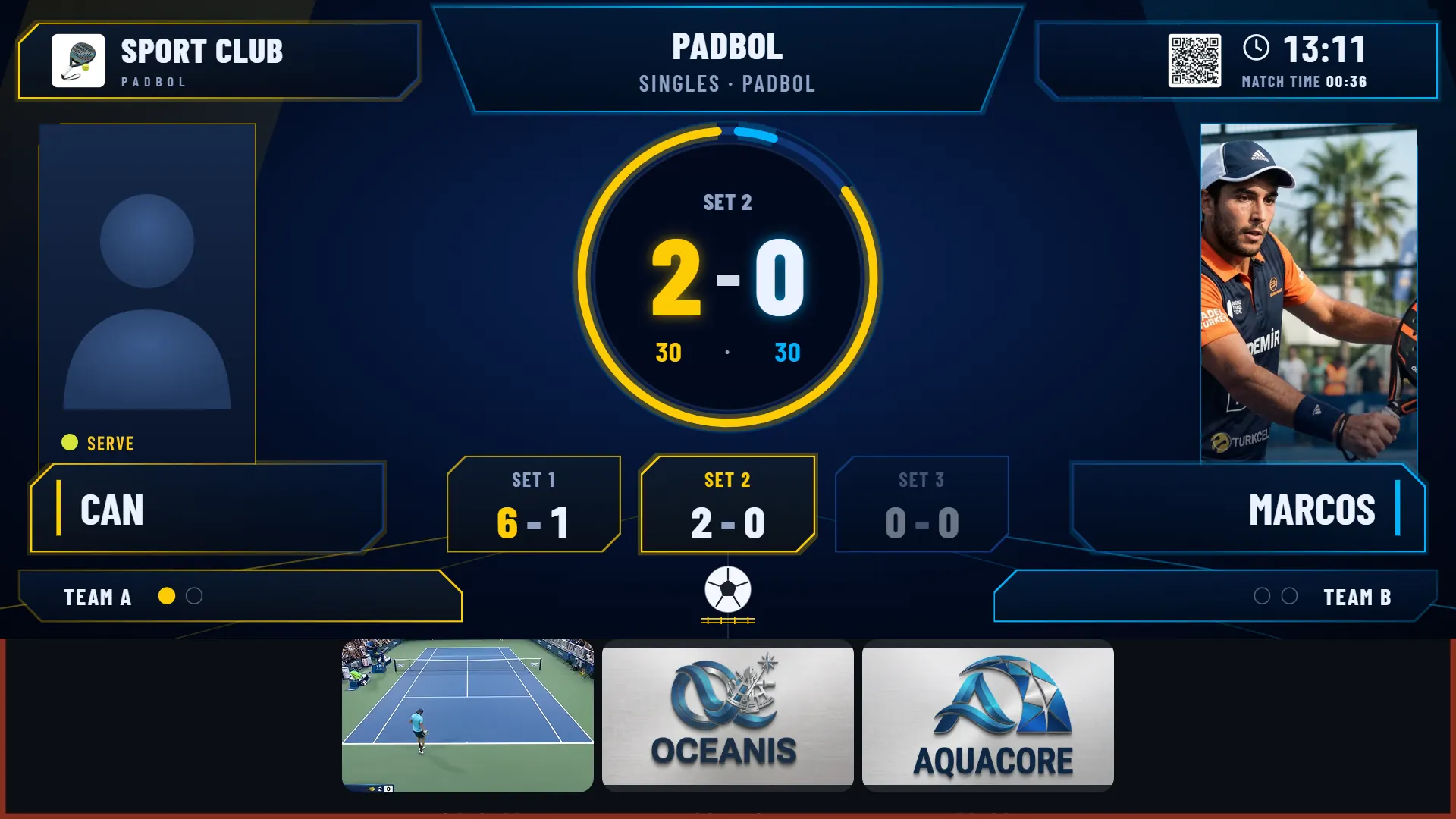
A new padbol court is a statement: the club is betting on a sport that is fun to play and fun to watch. But a court without a visible score leaves half of that value on the table. A padbol scoreboard turns every match, from a casual Friday booking to a league final, into something players and spectators can follow at a glance.
This article looks at the scoreboard from a facility owner's point of view: what it changes for players, for spectators, for the people running the venue and for the bottom line.
1. Players stop arguing about the score
Padbol is fast and physical. Players are reading the ball off the walls and moving with their partner, so it is easy to lose count after a long rally or a tight game. When two pairs remember the score differently, the match stops.
A score screen ends that. The current point, the game score and every set are on the TV, and the serving side is marked. Players glance up between points and carry on. For new players, who are still learning how a padbol match unfolds, a clear screen also makes the sport easier to pick up.
2. Bookings run on time
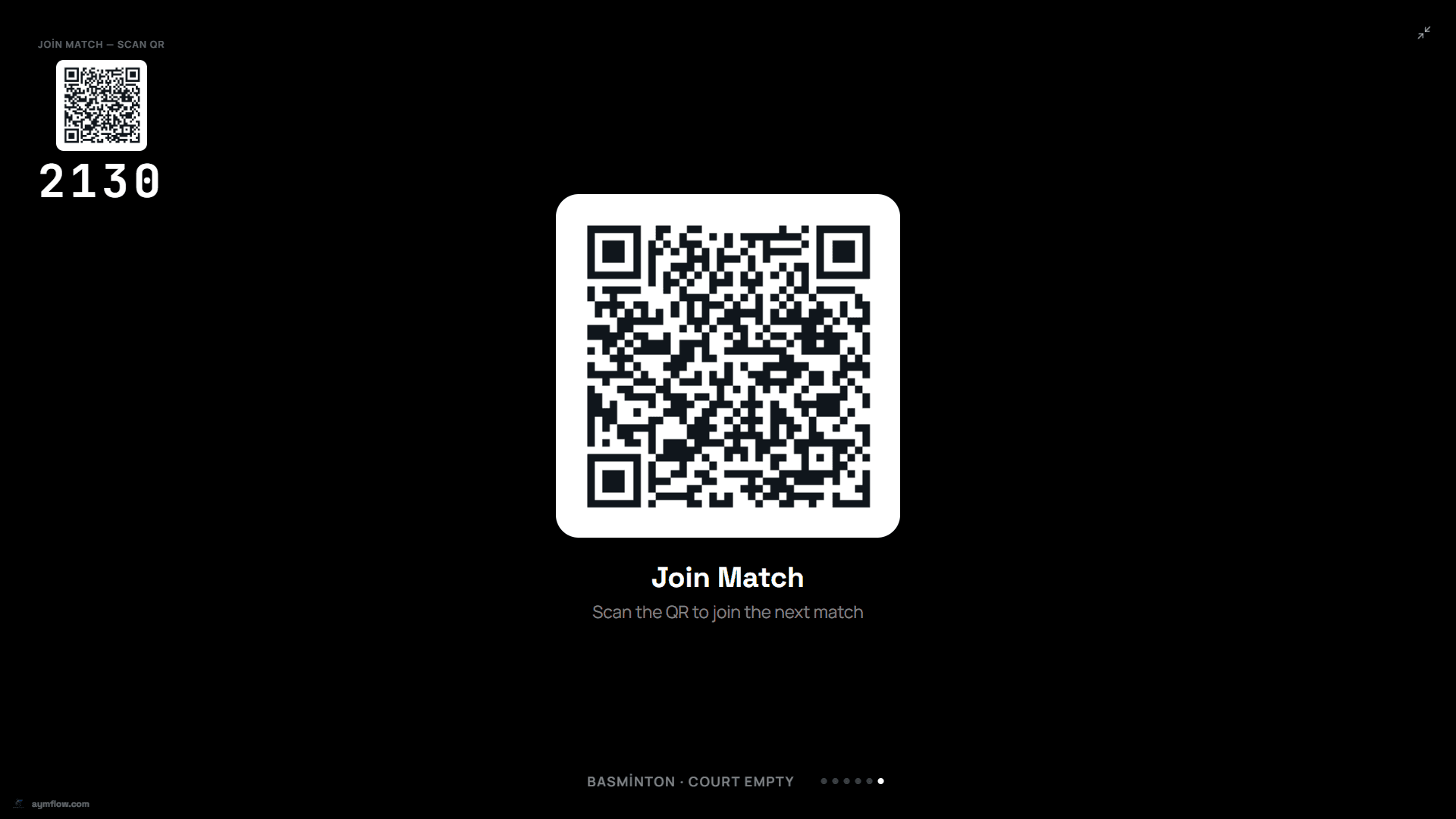
Most padbol courts are rented by the hour. Every minute spent rebuilding the score is a minute the players paid for and didn't play, and an overrun pushes back the next group. Because the score is entered from a phone and shown instantly on the screen, there is nothing to reset or carry between matches: the court TV shows a fresh join QR code and PIN for the next group as soon as a match ends.
3. Spectators get a real show
Padbol is a spectator-friendly sport, and the people around the court are often the next players, friends or family. Without a score, all they see is movement. With a padbol score screen they see who is ahead, which set is being played and when a game is decided. That makes the venue more lively, keeps people around the court longer and turns casual watchers into future bookings.
Spectators don't even need to stand at the glass: the QR code on the screen opens the live score in a mobile browser, with no app to install.
4. Sponsor space that can pay for the screen
A scoreboard is also advertising space that everyone on and around the court is looking at. Multi Score Screen shows a sponsor strip under the live score during the whole match, and while a court is empty the TV can rotate full-screen sponsor ads together with the join QR code.
For a club launching padbol, a local sponsor on the court screen can help cover the cost of the system. Brands get visibility in front of an engaged audience, and the club gets a new revenue line instead of a new expense.
5. A more professional venue
A live score screen with player photos, the club's name and a modern theme changes how a court feels. It looks like an event, not just a rental. That matters for leagues, tournaments and corporate bookings, and it shows up in photos and videos that players share on social media.
6. Easy for staff, no hardware to maintain
A dedicated LED scoreboard needs mounting, wiring and maintenance. Multi Score Screen runs on the TV or display the court already has, with an internet connection and a streaming app or HDMI input. There is no cable between the phone and the screen and no device to repair.
When the score needs to be official, referee mode turns a phone into the match console: a referee or staff member adds a point, takes one back and sets the server, and the TV follows instantly. Mistakes are fixed with point and game undo.
7. One system for every court in the venue
Few venues build a padbol court in isolation. It often sits next to padel courts, a tennis court or a multi-sport hall. Multi Score Screen supports eight sports on one platform, so the same login runs the padbol scoreboard, the padel scoreboard and the rest, and staff only learn one interface. If you run both padel and padbol, our article on padel scoreboard vs padbol scoreboard explains how one system covers both courts.
What to look for in a padbol scoreboard
Before you choose a system, check that it:
- shows sets, games, the current point and the server clearly from anywhere on the court,
- runs on a normal TV instead of requiring special hardware,
- is controlled from a phone, by players or by a referee,
- has room for sponsors,
- lets spectators follow the score on their phones,
- covers the other sports your venue offers.
For the full picture of how the system works, read our padbol scoreboard guide. When you are ready to install it, follow how to set up a padbol scoreboard on your TV.
Frequently asked questions
Is a scoreboard worth it for a single padbol court?
Yes, for most clubs. The Starter plan covers one court and one sport for $44 a month, and a sponsor on the screen can offset that cost. See all plans on the pricing page.
Who keeps the score during a match?
Either the players, who join the match from their phones by scanning the QR code on the court TV, or a referee or staff member using referee mode.
Can sponsors appear on the padbol score screen?
Yes. A sponsor strip runs under the live score, and full-screen sponsor ads rotate while the court is empty.
Do spectators need an app to follow the score?
No. They scan the QR code on the screen and the live score opens in their mobile browser.
Thinking about a padbol court, or already running one? Request a demo and see the scoreboard live on your own TV, or explore all eight sports on the Multi Score Screen home page.
Explore the Multi Score Screen digital scoreboard for padel, tennis, pickleball and 5 more sports →